
- Home
- >
- News
- >
- Public Information
- >
- PET Mosquito Repellent Spray Bottle: New Streamlined Design Market Acceptance Survey Report
PET Mosquito Repellent Spray Bottle: New Streamlined Design Market Acceptance Survey Report
PET Mosquito Repellent Spray Bottle: New Streamlined Design Market Acceptance Survey Report
I. Survey Summary
This survey collected 1,268 valid samples, with an overall positive rating of 3.87 points. The light tea-colored, streamlined PET mosquito repellent spray bottle has demonstrated strong market acceptance and represents a highly promising differentiated packaging solution within its niche segment. The product's core competitiveness lies in its high visual recognition and aesthetic appeal, making it particularly suitable for young women in home and commuting scenarios. It shows significant commercial potential across online content e-commerce platforms, mid-to-high-end maternity stores, and premium daily care retail channels. However, limitations in bottle structure and material, along with channel compatibility constraints, prevent its universal application across all markets. With targeted structural improvements and precise tiered positioning, the overall acceptance score could rise to 4.3 points, indicating substantial commercialization prospects. Direct full-channel rollout without modifications would lead to customer attrition, excessive costs, and weak sales momentum, making it unsuitable for price-competitive, saturated mass-market segments.
II. Current Market Constraints, Shortcomings, and Core Issues
1. Limited Adaptability to Usage Scenarios
The product performs best in home and daily commuting settings, but shows significant shortcomings in outdoor camping and specialized use for young children. The slender bottle design has a high center of gravity and narrow base, making it prone to tipping and leaking when full. Its vertical footprint in backpacks is large, and its resistance to compression is weak—factors that alienate two key consumer groups: mothers and outdoor enthusiasts.
2. Functional Limitations of PET Transparent Material
The light tea-colored, highly transparent bottle offers poor light-blocking performance. For products containing plant essential oils or easily oxidized mosquito-repellent ingredients, additional opaque outer packaging is required, significantly increasing overall production costs. Only basic chemical-based repellent sprays can be effectively used with the current transparent material.
3. Higher Production and Distribution Costs Compared to Standard Bottles
The cost of custom-shaped, streamlined blow-mold tools is substantially higher than standard straight PET mosquito repellent bottles, driving up per-unit manufacturing costs and making it difficult to sustain low-price, high-volume product lines priced at 9.9 yuan. Additionally, the elongated shape requires greater shelf height and more storage space, resulting in lower warehouse utilization in major supermarkets and creating significant barriers to distribution through mainstream retail channels.
4. High Acceptance Threshold in Lower-Tier Markets
Middle-aged and elderly consumers with essential needs, as well as budget-conscious buyers in lower-tier markets, are accustomed to traditional short, squat, cylindrical mosquito repellent bottles. They show low willingness to adopt the sleek, unconventional packaging, leading to poor conversion rates in offline township supermarkets and discount retail chains.
III. Research Subjects, Implementation Methods, and Objectives
(1) Basic Information on Research Execution
The research period lasted 14 days, with online questionnaires distributed across TikTok, Xiaohongshu, and Taobao's daily chemical consumer communities, while offline field visits were conducted in community supermarkets, maternity and baby product chains, and outdoor gear stores. Four categories of samples were collected through stratified sampling: 522 responses from women aged 18–28, 416 from mothers aged 29–45, 230 from outdoor commuting and camping enthusiasts, and 100 from daily chemical distributors and supermarket buyers, resulting in a total of 1,268 valid questionnaires and interview records. The study employed three testing methods: an online five-point likability questionnaire, in-person tactile and hands-on interviews, and visual comparison tests of competing products on the same shelf.
(2) Core Objectives of This Survey
1. Gather consumers' genuine preferences and concerns regarding the new streamlined bottle's appearance, color scheme, grip feel, size, and design;
2. Compare consumer purchase inclinations between traditional straight mosquito repellent bottles and the new irregular-shaped bottle, quantifying the impact of packaging aesthetics on conversion rates;
3. Identify core packaging needs across different age groups and usage scenarios to precisely define target customer segments;
4. Collect input from offline stores, online sellers, and distributors on product placement, pricing, and display strategies to evaluate multi-channel adaptability;
5. Synthesize user and channel feedback to guide bottle design improvements, providing data support for mass production, brand positioning, and marketing planning.
(3) Research Background
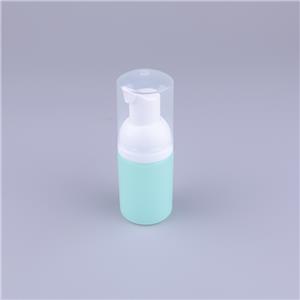
The summer mosquito repellent consumer goods market continues to expand, and consumers' purchasing decisions have evolved beyond mere effectiveness in repelling mosquitoes to include additional factors such as packaging aesthetics, portability, desktop decorative appeal, and grip experience. Currently, mainstream mosquito repellent liquid PET bottles on the market all adopt a standardized, short, cylindrical shape, resulting in severe homogenization of packaging and extremely low visual differentiation on retail shelves. This study focuses on a light tea-colored, high-transparency, streamlined, hourglass-shaped PET spray bottle paired with a fruit-green misting pump head, suitable for 100–180 ml products such as mosquito repellent sprays, fragrance waters, and anti-itch essential oil sprays. To evaluate the commercial viability of this innovative non-standard bottle design, this dedicated market acceptance survey has been conducted.
IV. Detailed Analysis of Survey Data: Users, Purchase Intentions, and Channel Feedback
(1) Visual Appeal of Product Design
The new streamlined bottle received an average score of 4.12 out of 5 in visual appeal, compared to just 2.75 for the traditional straight cylindrical mosquito repellent bottle. 76.3% of respondents appreciated the light tea-colored transparent body paired with a fresh fruit-green pump head, which aligns well with summer product aesthetics. The soft tapered waistline differentiates it from homogenized competitors, making it suitable as both functional and decorative item on bathroom counters or dressing tables—ideal for social media photo sharing and word-of-mouth promotion.
Significant differences emerged across user segments: young women aged 18–28 showed an 89% positive response, praising its elegant and minimalist design and expressing willingness to try the new product based on appearance alone. Mothers reported 72% acceptance, valuing the transparent body that allows easy monitoring of remaining repellent volume, thus helping manage dosages for children. Outdoor enthusiasts showed only 58% favorability, primarily concerned about the slender shape being prone to tipping when packed in backpacks. Meanwhile, 87% of distributors noted the bottle’s strong visual differentiation on shelves, which naturally draws customer attention and boosts spontaneous purchase intent.
(2) Practical Performance – User Testing Evaluation
1. Grip Comfort: 69.5% of respondents approved the tapered neck design, which fits women's smaller hands well and prevents slipping when held with one hand; however, 19% of users reported that the base is too narrow and the center of gravity is too high when full, making it prone to tipping over and leaking when used by children alone.
2. Portability: For short commutes and on-the-go touch-ups, 73% of users found the slender bottle easier to fit into side pockets of small bags; among long-distance camping and outdoor travelers, 62% noted the bottle’s height was excessive, significantly occupying vertical space in backpacks, making it less portable than shorter, wider conventional bottles.
3. Acceptance of PET Material: 91% of consumers appreciated the lightweight PET material’s resistance to breakage; only parents and infants’ caregivers expressed concern about the semi-transparent tea color providing insufficient light blockage, potentially accelerating oxidation and reducing the effectiveness of mosquito-repellent essential oils.
4. Spray Pump Experience: The fruit-green mist pump received an 83% positive rating for its fine mist output and moderate pressure required; a small number of users mentioned the outer transparent protective cap was slightly thin, making it prone to wear and cracking after repeated opening and closing.
(3) Price and Purchase Intent Survey Results
In a controlled purchase scenario featuring identical mosquito repellent formulas but differing packaging, 67.8% of consumers preferred the new streamlined design, 21.5% showed no clear preference, and only 10.7% remained loyal to the traditional straight cylindrical packaging.
Price premium acceptance test: When the conventional version of the same volume repellent is priced at 19.9 yuan, 72% of consumers are willing to accept a price range of 24.9–29.9 yuan for the new bottle design. However, if the packaging premium exceeds 10 yuan, purchase intent drops sharply, with only 23% of consumers still willing to buy. Procurement feedback from maternity and baby product channels clearly indicates that elegant, uniquely shaped bottles are well-suited for mid-to-high-end children's mosquito repellent lines, but are entirely unsuitable for low-cost, mass-market repellents priced at 9.9 yuan.
(4) Channel-specific Acceptance Breakdown
1. Online short video platforms/e-commerce channels: 100% of surveyed e-commerce sellers are optimistic about this bottle design. Its high aesthetic appeal is well-suited for image-based and short-video product promotion, making it highly effective in creating viral online products. It can be positioned as a premium fragrance mosquito repellent or home-relaxation spray within niche categories.
2. Offline maternity stores and premium beauty concept stores: 92% of stores are willing to stock it in bulk. The refined appearance aligns with the mid-to-high-end positioning of these stores, effectively increasing average transaction value per item.
3. Large-format supermarkets: Acceptance stands at only 61%. Mosquito repellent shelves in supermarkets primarily feature low-cost, high-volume products. The elongated bottle requires higher shelf space and has lower storage stacking efficiency compared to standard bottles, resulting in relatively poor cost-effectiveness for large-scale distribution.
4. Outdoor specialty stores: Acceptance is 45%. Outdoor consumers prioritize durability, compact size with high capacity, and portability under pressure—characteristics that the slender bottle design does not meet, thus failing to satisfy practical needs in outdoor scenarios.
V. Implementation Optimization and Marketing Recommendations
(1) Bottle Design and Material Improvement Plan
1. Dual-specification bottle development: The original slender version targets the home and commuting market; simultaneously launch a shortened, wider-bottom variant to lower the center of gravity when full, enhancing stability on tabletops and better suited for maternal-infant and children's mosquito repellent niche markets. For outdoor channels, develop a compact, portable derivative model to address scenario limitations.
2. Material differentiation: Use matte tea-colored PET bottles for essential oil-based repellents to enhance light-blocking and antioxidant performance; retain transparent light-tea-colored material for budget-friendly basic sprays to control raw material costs.
3. Component upgrades: Reinforce the outer transparent protective cap of the spray pump with thicker material to improve wear resistance during repeated opening and closing, thereby extending the product’s aesthetic lifespan.
(2) Precise Market Segmentation Strategy
1. Online aesthetics-driven segment: Focus primarily on young women aged 18–30, emphasizing fragrance-based mosquito repellency and refreshing floral water concepts. Leverage visual content marketing on platforms like Xiaohongshu and Douyin to justify premium packaging pricing.
2. Maternal-infant niche segment: Introduce widened-base bottle design paired with cartoon-style safety labels and leak-proof locking pump heads, exclusively distributed through offline maternal-child retail chains, positioning as gentle, child-safe mosquito repellent.
3. Avoid low-cost commodity competition: Exit the mass-market 9.9-yuan bulk repellent sector and steer clear of saturated low-price supermarket channels, instead focusing on premium daily care brands and core online content e-commerce platforms.
(3) Channel-Specific Promotion Execution Strategy
Online promotion will focus on visual presentation, highlighting the bottle's sleek, minimalist, and premium design to create a distinctive memory point for the mosquito-repellent product. Offline efforts will prioritize beauty concept stores and maternity & baby specialty shops, featuring dedicated, standalone display areas while minimizing investment in low-cost big-box retail. For outdoor consumers, a compact derivative packaging will be launched separately to meet demand across all usage scenarios.
| Phone : | +86-15068162157 |
|---|---|
| Fax : | +86-0576-87143691 |
| Email : | linjiemao6@gmail.com |